 Nepal Newsbox
2083 Jestha 16, Saturday
Nepal Newsbox
Nepal Newsbox
2083 Jestha 16, Saturday
Nepal Newsbox
Why Three Major Dashain Releases Failed at the Box Office

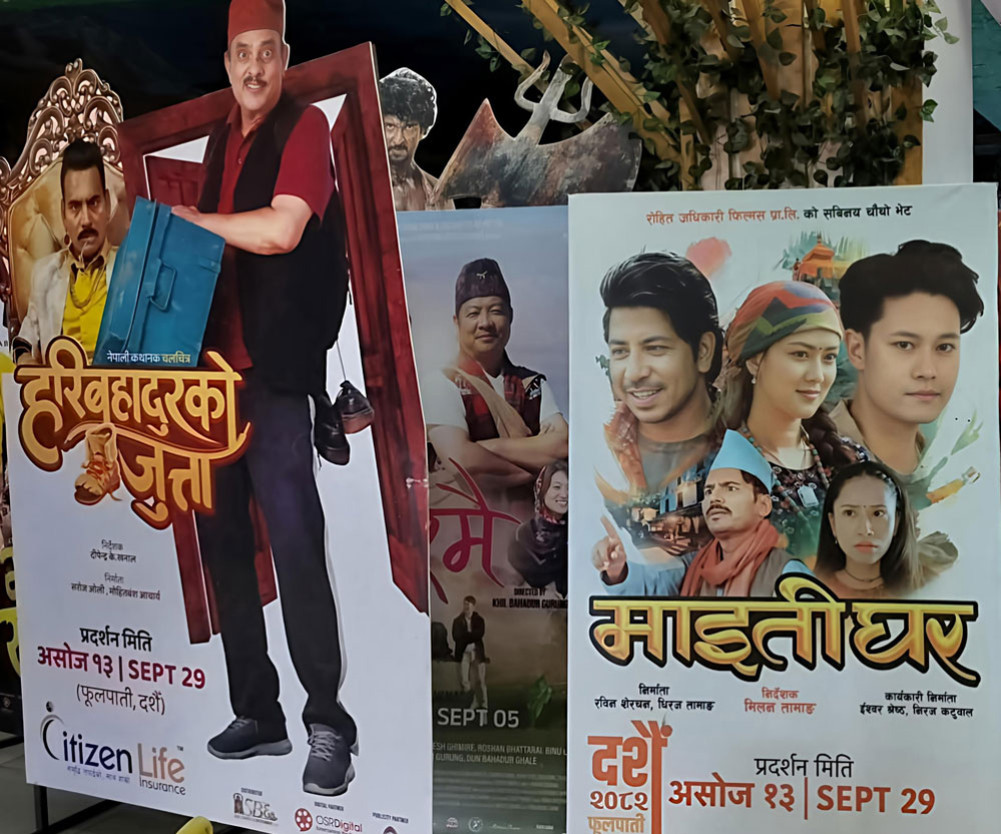
This Dashain, three highly anticipated Nepali films—“Balidan,” “Haribahadurko Jutta,” and “Maitighar”—were released nationwide with the expectation of strong box office performance. Traditionally, Dashain is considered the prime season for Nepali cinema, as audiences have holidays and theaters are usually packed. However, this year’s outcome was surprisingly weak. Beyond the usual reasons like weak storytelling or competition, a new and powerful dynamic emerged: the Gen Z revolution in taste, growing political chaos, and heightened security concerns in public spaces, all of which significantly affected theater turnout.
Let’s explore the reasons more deeply.
1. High Expectations, Low Satisfaction
“Balidan” earned about NPR 3.75 crore, “Haribahadurko Jutta” around NPR 3.21 crore, and “Maitighar” only NPR 2.13 crore. While these numbers seem okay, last year’s Dashain blockbusters crossed 5–10 crore. Compared to that benchmark, these films underperformed. This shows that the audience was not truly satisfied with the content or experience.
2. Lack of Fresh and Powerful Storytelling
Modern viewers want ** originality, emotional depth, and cinematic quality. **
“Balidan” had a political/social theme but weak delivery.
“Haribahadurko Jutta” relied on traditional comedy-drama formula.
“Maitighar” struggled with direction and narrative flow.
When films do not surprise or inspire, word-of-mouth promotion declines, and so do ticket sales.
3. The Gen Z Revolution in Entertainment Preferences
This is one of the biggest hidden reasons. Gen Z—the most active entertainment consumer group—no longer watches films just because “it’s Dashain.” They prefer:
Trendy storytelling styles
Bold characters and themes
Global quality visuals
Fast-paced, meme-worthy, social-media buzz films
If a film does not “feel modern,” Gen Z simply skips it and watches Korean dramas, anime, Hollywood, South Indian, or OTT content instead. This generation shift in taste means filmmakers must evolve or become irrelevant.
4. Political Chaos and Public Frustration
The current political instability in Nepal has created a heavy social mood. People are frustrated with:
Corruption
Leadership failure
Government negligence
Law and order issues
This atmosphere affects entertainment behavior. When people are mentally exhausted or financially pressured by unstable politics, cinema is no longer a priority. Additionally, films with political themes (like “Balidan”) may trigger controversy or viewer fatigue, causing audiences to avoid them.
5. Security Threats and Safety Concerns
In recent months, there have been increasing reports of:
Theft and pickpocketing in crowded areas,
Clashes and protests,
Poor crowd management during festivals,
Lack of police presence in certain cities.
Families often feel unsafe going to packed cinema halls, especially with children during festivals. When people doubt security, they choose home entertainment over theaters.
6. Competition from Digital Platforms and Foreign Content
Netflix, YouTube, TikTok, South Indian blockbusters, and Hollywood films offer faster, cheaper, more exciting content. Why spend 500–800 rupees on a ticket when high-quality content is available at home?
7. Weak Marketing and Promotion
Unlike past hit films, these movies did not create massive hype or emotional connection.
Promotion felt routine—not exciting, innovative, or viral.
8. Changing Audience Behavior
Viewers now check reviews, trailers, and social media reactions before buying tickets. Mixed or negative buzz hurt all three films.
9. Same-Day Release and Screen Sharing
All three films released simultaneously, dividing attention, screens, and shows. Releasing on different dates could have helped each film individually.
Conclusion: A New Reality for Nepali Cinema
These films did not totally fail—but they failed to meet the festival-level expectations.
The industry now faces a new era shaped by Gen Z’s evolving taste, political instability, and public security concerns. To win back the box office, Nepali filmmakers must:
- Innovate and modernize storytelling
- Understand Gen Z psychology
- Improve production quality
- Use strong, creative marketing
- Release strategically
- Consider social and political mood
Only by adapting to this new environment can future Dashain releases become true blockbusters again.
Related News