 Nepal Newsbox
2083 Jestha 16, Saturday
Nepal Newsbox
Nepal Newsbox
2083 Jestha 16, Saturday
Nepal Newsbox
“The Promise and Betrayal of Democracy in Nepal”


“The Promise and Betrayal of Democracy in Nepal”
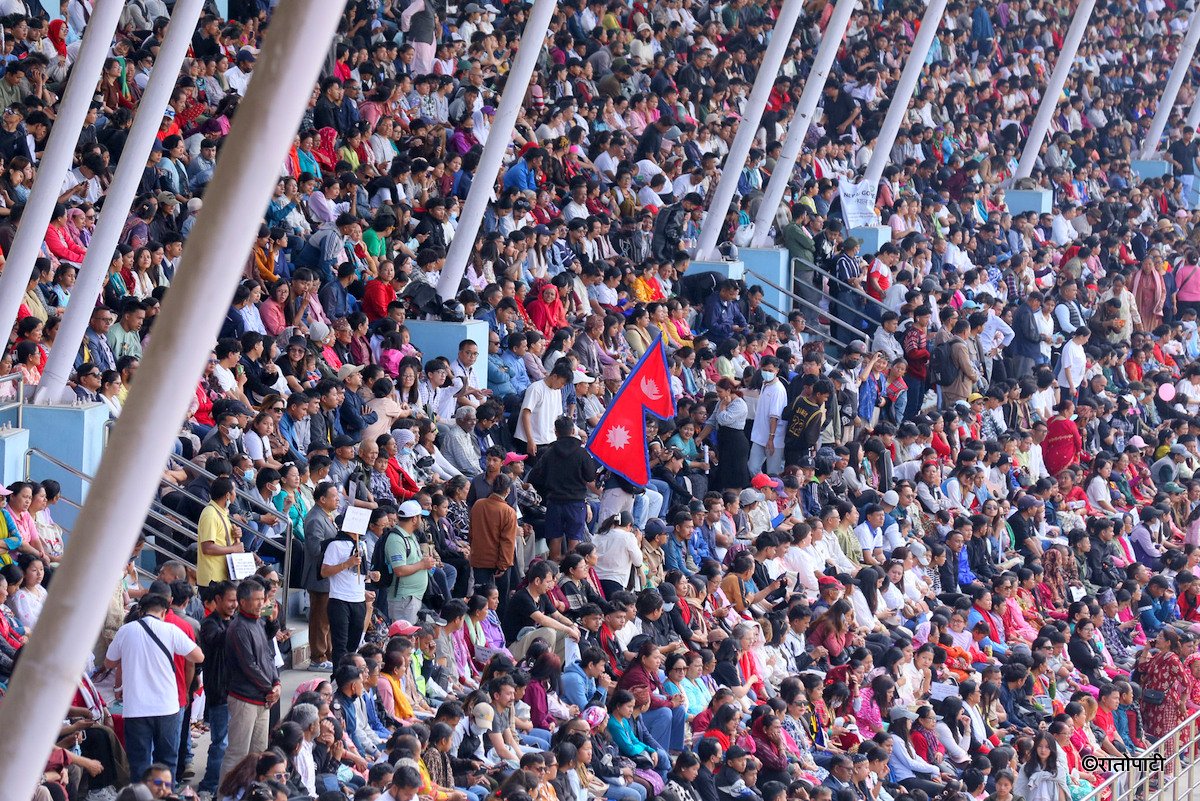
Nepal’s journey toward democracy has been long, painful, and marked by sacrifice. From the overthrow of the Rana oligarchy in 1951 to the restoration of multiparty democracy in 1990 and the establishment of a federal democratic republic in 2008, the people have repeatedly risen against authoritarian rule. Each movement came with a promise: that democracy would give voice to the ordinary citizen, ensure justice, and build an inclusive Nepal. The streets echoed with slogans of equality, rights, and dignity. Democracy was not simply a political change—it was a dream of a new nation. But as decades passed, that dream began to fade.
With the 2015 Constitution, Nepal embraced federalism, inclusion, secularism, and republicanism. The document promised representation to women, Dalits, Madhesis, Janajatis, and marginalized regions. Federalism aimed to decentralize power, allowing provinces to govern themselves and address local needs. People believed the new system would break Kathmandu’s monopoly and end historical discrimination. The constitution looked progressive on paper and attracted global praise. Yet, beneath the celebrations, cracks were already forming. Laws were delayed, institutions remained centralized, and powerful elites adapted to protect their interests.
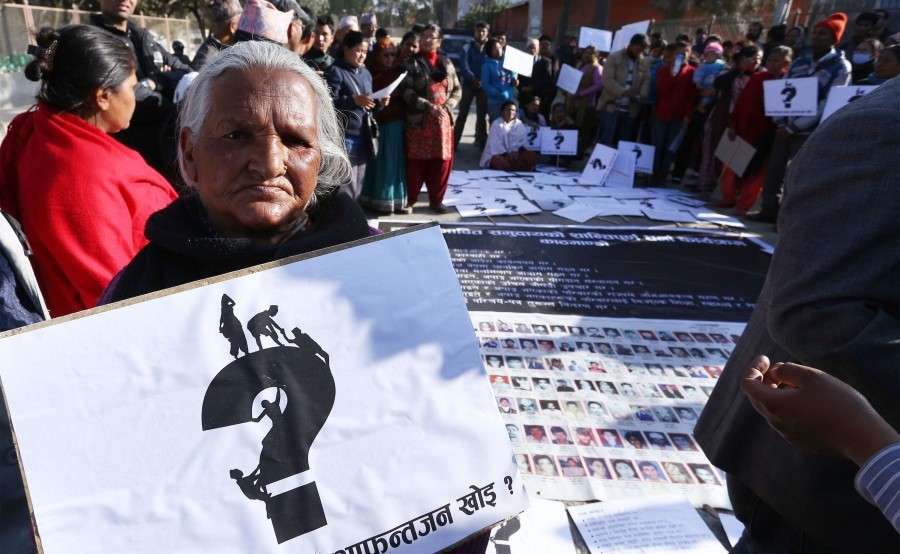
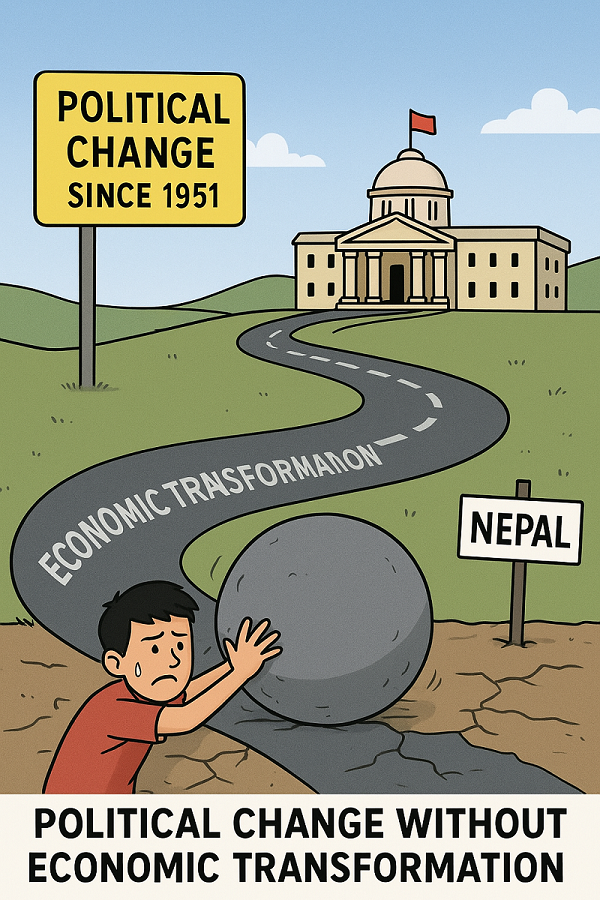
Despite political transformations, the lives of ordinary Nepalis did not change significantly. Corruption deepened, inequality persisted, and access to justice remained limited for the poor. Federalism became symbolic when provinces depended entirely on the central government for budgets, laws, and administrative authority. Political parties, instead of nurturing democratic culture, turned into private businesses controlled by a few leaders. The same faces rotated in power, making democracy feel like a game of chairs among elites rather than a system for the people. As a result, citizens started losing faith in the very system they fought to build.
Why did democracy in Nepal fail to deliver justice? The problem lies not only in politicians but in the structure of the system. Democratic institutions were created, but democratic behavior was never cultivated. The mindset of power, hierarchy, favoritism, and patronage continued unchanged. The bureaucracy inherited from monarchy remained resistant to reform. Law enforcement worked for the powerful instead of protecting citizens. Even the judiciary, expected to be the guardian of justice, became slow, expensive, and influenced by politics. Democracy was supposed to dismantle injustice—but injustice simply learned to wear the mask of democracy.
This article seeks to go beyond political parties and expose the deeper systemic injustice embedded within Nepal’s democracy. It argues that the failure is not just about who is in power, but about how power is structured, distributed, and protected. The purpose is to uncover why democratic institutions did not produce democratic culture—and how this gap continues to harm the nation. By examining the roots of inequality, the manipulation of law, and the capture of resources, this book reveals that Nepal’s democracy suffers from a justice deficit, not just a governance deficit.
To understand this failure of democracy, we have to divide this failiur into three major pillars of systemic injustice: social injustice, political injustice, and economic injustice. Each pillar explores how Nepal’s structures continue to exclude the weak and empower the powerful, even under democracy. The goal is not to blame democracy itself, but to diagnose why it has not functioned as promised. If we do not understand the disease, we cannot cure it. Nepal’s future depends on facing these uncomfortable truths with courage and clarity.
Ultimately, the learning goal of this article is simple yet profound: to understand why democratic institutions did not produce democratic behavior in Nepal. Only by asking this question can we begin to rebuild a democracy that is not just about elections or leaders, but about justice, dignity, and fairness for every citizen. The promise of democracy has not been fulfilled—but it is not too late to reclaim it.
Related News