 Nepal Newsbox
2083 Jestha 16, Saturday
Nepal Newsbox
Nepal Newsbox
2083 Jestha 16, Saturday
Nepal Newsbox
“In Gen Z Protest, Congress Burns UML, UML Burns Congress” — Balen Shah


“In Protests, Congress Burns UML, UML Burns Congress” — Balen Shah
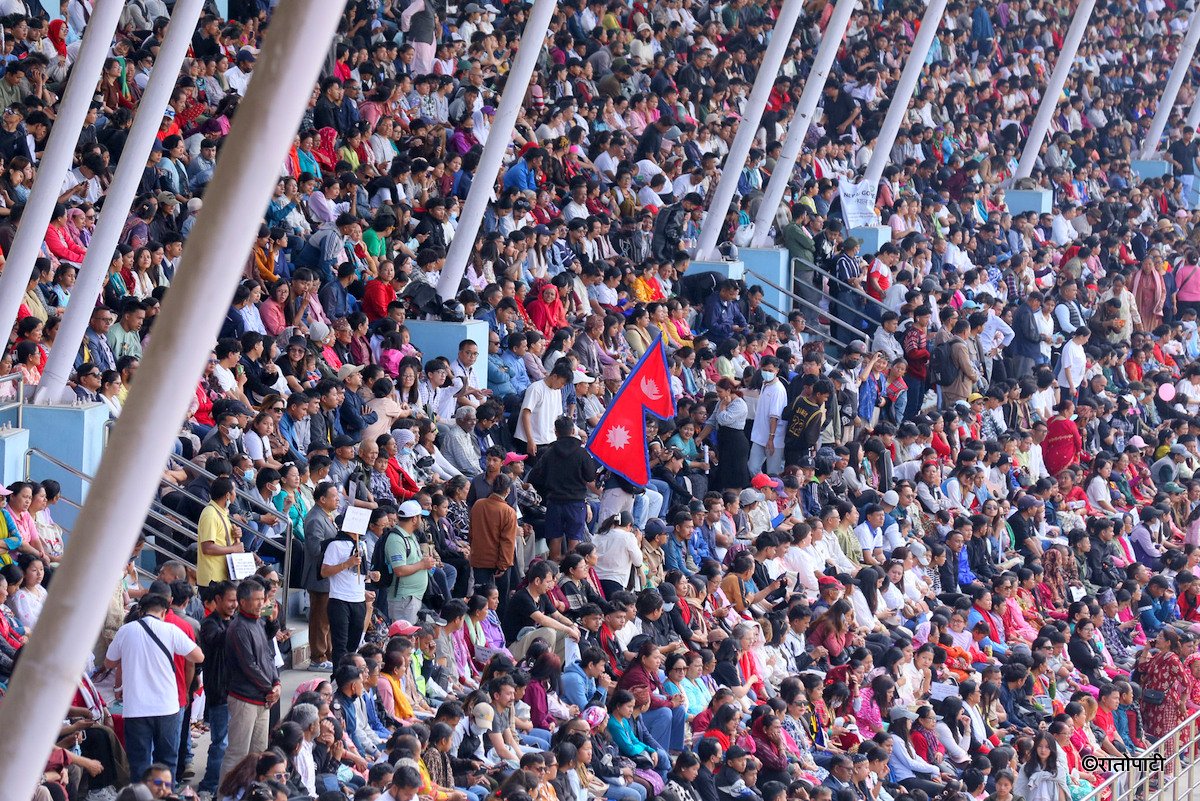
In the Gen Z protests, Congress burns UML, and UML burns Congress. These fires are not just political acts — they are reflections of how deeply divided we have become as a nation. And now, even UML burns their own party leaders’ houses, and Congress burns their own party leaders’ houses, yet they (Congress and UML) blame Gen Z and the common people for their losses and the nation’s losses.
The truth is simple but painful: in these flames, it is not the leaders who suffer — it is the people. On the streets, flags differ, slogans differ, but the pain remains the same. Politics in Nepal has long stopped being a competition of ideas; it has turned into a cycle of revenge.
When UML sits in power, Congress storms the streets. When Congress reaches power, UML takes its turn to protest. Every time, the people are caught in between — schools close, offices shut down, hospitals stop providing services, and daily life collapses. Yet, the leaders’ vehicles, their speeches, and their security never stop.
We have made our political parties larger than our nation itself. The slogan “My Party” echoes louder than “My Country.” Those who ignite these political fires in the name of loyalty to their leaders end up burning not their rivals, but the very dreams and hopes of the nation.
Kathmandu’s Mayor Balen Shah once said, “The country isn’t ruined — our thinking is.” That single line holds the essence of our problem. The soil, rivers, and people of Nepal are still pure; what has decayed is our mindset — a mindset that turns opposition into enmity and differences into destruction.
If we do not change our thinking, the nation will never change its direction. The issue is not UML or Congress — it is our collective belief that progress must come from power, not from principles. We have forgotten that real politics is about service, not showmanship.
What Nepal needs now is not more fire, but cooperation. We need competition, yes — but competition in integrity, in hard work, and in public service. That is how real progress begins.
When that kind of competition takes root, the old sentence — “Congress burns UML, UML burns Congress” — will finally end. And a new one will emerge:
“Let everyone join hands to build the nation.”
1. The Blame Game: We and Our Excuses
In protests, Congress burns UML, and UML burns Congress — but it’s the ordinary people who get burned in those fires. This statement is not merely a reflection of political events; it’s a mirror of our national mindset. We have become addicted to blaming others — always placing the cause of every failure, weakness, and frustration on someone else’s shoulders. This attitude doesn’t burn the country; it burns our own thinking.
We keep repeating lines like, “Foreigners ruined our country,” “Our leaders are corrupt,” and “The youth have abandoned the nation.” These phrases have been repeated so often that they now sound like comforting excuses rather than calls to action. But have we ever stopped to ask — what are we ourselves doing?
Did foreigners throw garbage on our streets? No — it’s us, the citizens, who refuse to pick it up.
Are leaders corrupt? Perhaps. But do we, as individuals, strive to be honest in our own actions? Most of the time, we don’t. In fact, we often use the leaders’ corruption as a shield to hide our own small dishonesties.
Do we complain that the youth are leaving the country? Yes. But have we tried to build something meaningful here at home? Or are we too preparing to take the easier route to Qatar, Japan, or Australia?
We’ve sharpened our eyes to spot the faults of others but blinded ourselves to our own. That’s the real blame game. And as long as we refuse to take responsibility for our own part, no policy, no leader, and no slogan will ever change this country.
As Kathmandu’s Mayor Balen Shah said, “The country isn’t ruined — our thinking is.”
That’s the truth. The nation itself — its soil, its rivers, its people — is not broken. What’s broken is the mindset. When our thinking becomes selfish, angry, and passive, the backbone of society weakens.
So now, it’s time to stop looking for blame and start looking for responsibility. The power to rebuild this country lies in our own hands. Leaders may show the direction, but the journey must be ours. If we change our thinking, even the fires of protest can become light.
The country isn’t destroyed — it’s just covered by our excuses and blame. And now, it’s time to clear them away.
2. The Visa and Other People’s Doorstep: The Price of Dignity
Today, thousands of Nepalis are knocking on someone else’s door for visas. We beg for recommendations, bow under someone’s name, and seek another’s favor — selling our dreams in the process. In those moments, personal benefit seems bigger than national pride. Yes, we may get the visa, but slowly, we lose our self-respect. And once abroad, we post on Facebook: “There’s no future in this country.”
But here’s the real question — is there truly no opportunity, or have we simply stopped looking for it?
A country’s potential never dies. What dies is our courage and our will to work hard. Going abroad is not a crime; but looking down on your own country — that is the real offense. We have hands that can work, minds that can create, and hearts full of ideas — yet our weakness lies in not using them.
Kathmandu’s Mayor Balen Shah once said, “Leaving the country isn’t a sin — doing nothing for it and still complaining is.”
That line isn’t just a speech; it’s a moment of realization. Balen has shown young people that with effort and confidence, the door to opportunity opens right here at home. Those who try to build something in their own city, in their own country, never utter the phrase, “There’s nothing here.”
We rush to knock on the doors of foreign embassies — but have we ever knocked on our own country’s door? Have we ever asked ourselves, “What can I do for my nation?”
That question itself is the first door to change. Once it opens, it’s not the door to a visa that matters — it’s the door to dignity.
Our nation whispers to every citizen: “You may go abroad, but go with self-respect — and come back with pride.”
Because a visa is just a piece of paper, but dignity is the value of your soul.
Patriotism is not only about waving a flag — it’s about seeing your own home, your own streets, and your own city with respect and care.
So now, it’s time to stop knocking on other people’s doors — and start knocking on our own. That’s where the new journey of self-respect begins.
3. Politics: The Game of Burning Others and Scorching Ourselves
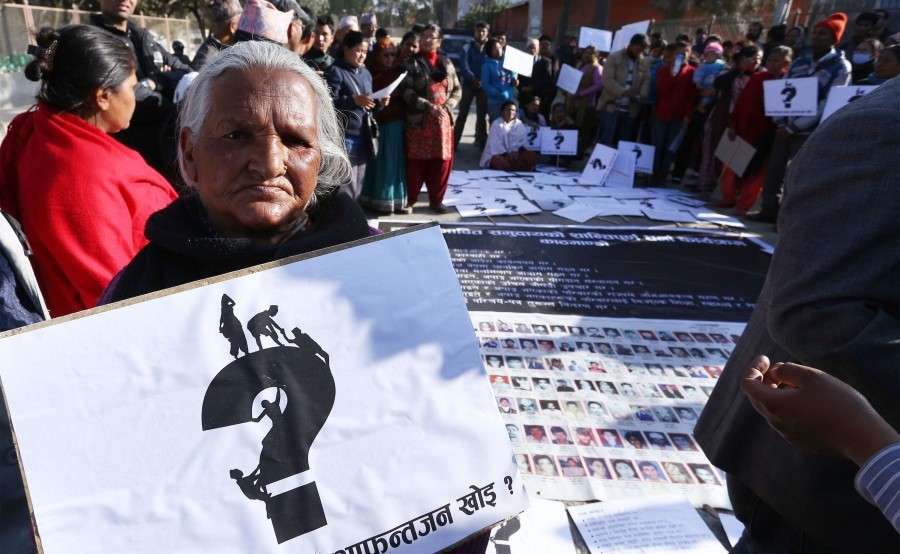
We heat our blood in the name of political parties, but stay silent in the name of the nation. That is Nepal’s real political illness. Whenever there are movements, Congress burns UML, and UML burns Congress — but it’s the ordinary people who get burned in that fire. The mother in the hospital suffers, students’ exams are postponed, and laborers go hungry. In the smoke of political unrest, the lives of citizens grow darker.
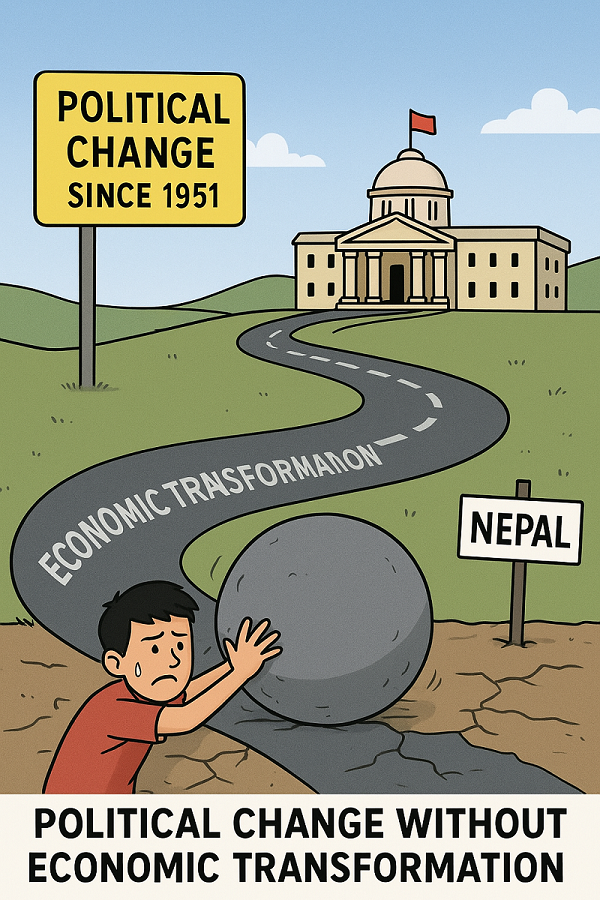
We’ve made loyalty to parties greater than responsibility to the nation. The shout of “My party!” echoes louder than “My country!” Governments change, but mentalities don’t. The slogans on the streets may sound new, but the mindset remains old — opposition, revenge, and blame. And when the country slows down, it’s not the fault of one party; it’s the outcome of our collective failure.
Kathmandu’s Mayor Balen Shah has exposed this very tendency. He didn’t play politics — he practiced responsibility. Instead of chanting slogans, he sent out bulldozers. Instead of speeches, he cleaned the drains. His approach was different — he proved that “Nation-building isn’t about talk; it’s about work.”
Balen taught the people that it’s easy to criticize but hard to create. A city doesn’t get clean with speeches; it changes only through action. He faced opposition, endured criticism, yet never stopped. Through his actions, he showed that true politics is not about protest, but about progress.
Yet, we remain stuck in the same old mentality — “My party, my people, my profit.”
That mindset has made our nation smaller. As long as the party’s name is bigger than the country’s, the fire of development will remain just a flicker.
It’s time to stop burning and start brightening. Politics should not be about destroying rivals, but about competing — in honesty, in performance, and in vision. Only when that kind of competition begins will the political fire stop consuming the nation — and start lighting its way forward.
4. Blood on the Tea Table: Melody in Words, Malice in Behavior
At our tea tables, we often complain, “The country is dying.” With every morning cup of tea, conversations about politics, corruption, and development blend together. We stir every national problem into our tea — criticizing leaders, opposing policies, and finally declaring, “This country can’t move forward anymore.” Yet, at the same moment, if someone tries to do something good, we immediately become suspicious.
If someone starts cleaning the city, we say, “He just wants to be popular.”
If someone builds a road, we assume, “He must have taken a commission.”
If someone starts a youth campaign, we comment, “It’s just a Facebook drama.”
We are experts in criticism, but misers in appreciation. We don’t like to talk positively, because doing so requires a clean heart.
As Balen Shah said, “It’s hard to speak positively, because for that, your heart must be clean.”
This line isn’t just a quote — it’s a mirror of our reality. Balen showed that when you truly try to do something with honesty, you receive more accusations than support. He cleaned the city, yet some said, “He’s just showing off.” He removed disorder from the streets, and others said, “It’s populism.” But he didn’t stop speaking, because he understood — to bring change, it’s not your words but your actions that must be clean.
Our problem doesn’t lie only in our leaders, but also in our mindset. Our words are filled with melody, but our behavior is soaked in malice. We share the same blood — Nepali blood — yet we think differently. One dreams of building the nation; another turns that dream into sarcasm over a tea table.
Sometimes it feels as if we’re not drinking tea, but sipping anger and hatred. As long as we keep doubting one another’s efforts, national improvement will remain impossible. Reform begins with right thoughts — and those thoughts can only be born from a clean heart.
So, let’s stop complaining at tea tables and start talking about solutions.
Let’s make positivity a trend, and cooperation a culture.
Because the journey of national change begins the moment we learn not to criticize — but to appreciate.
5. Aren’t You Ashamed? — Time to Clean Our Thinking
Now the real question is — aren’t you ashamed?
This is our country, and the mistakes are ours too. We keep searching for someone else to blame, while hiding our own inaction. We blame foreigners for bridges not being built, and we pour our frustration on others when we don’t get a visa — but these are only excuses. Every failure reflects our own lack of preparation and effort.
In the smoke of political conflict, our future is fading. Those who set fires in the streets don’t build the nation, yet our silence allows the country’s voice to disappear. Still, there’s time — time to start cleaning from our own homes, our own neighborhoods, and most importantly, our own thoughts. When every citizen understands their responsibility, the seed of national transformation is planted.
The dirt isn’t only on the streets — it’s in our minds. The absence of good intentions and integrity has polluted our way of thinking. When our mindset becomes clean, the nation automatically begins to look clean. This isn’t just an ideal — it’s achievable in practice.
Balen Shah has shown this truth. With honesty, determination, and confidence, he proved that real change comes not from speeches or slogans, but from action and accountability. If we follow the same path, transformation in Nepal will no longer be a dream — it will become reality.
Now is the time to stop complaining and blaming — and start contributing and doing.
Ask yourself: “What am I doing for my country?”
The answer to that question is the first step toward cleansing our thoughts — and that step will be the light that brightens our nation.
Conclusion: We Are the Path to Change
Changing a nation is not something leaders alone can do — it begins with our mindset. Leaders can only show the direction, but walking the path is our shared responsibility. It’s easy to criticize, but far harder to contribute. That’s why the real shame is not in our failures, but in our silence — when we only criticize but never take action.
Now is not the time to complain, but to contribute. The day every citizen understands and fulfills their responsibility, real transformation will begin. We must realize — we are the ones who break the nation, and we are the ones who build it. Our actions alone define the shape of our society.
Kathmandu Mayor Balen Shah has shown through example that understanding a problem is not enough — we must build the habit of solving it. His leadership is not just about words but about action: cleaning roads and drains, maintaining public spaces, enforcing laws. These everyday practices are what strengthen a society and a nation.
The day we all take ownership of our part, the old saying — “In protests, Congress burns UML, and UML burns Congress” — will become a thing of history. A new era will write a new line: “Everyone must join hands to build the nation.”
Because ultimately, the truth remains — we are the ones who can destroy the country, but we are also the ones who hold the power to build it. With a change in mindset, and through contribution and action, we can illuminate the future of our nation.
Related News