 Nepal Newsbox
2083 Jestha 16, Saturday
Nepal Newsbox
Nepal Newsbox
2083 Jestha 16, Saturday
Nepal Newsbox
Struggle and Success of Zohran Kwame Mamdani: From Immigrant Roots to Rising New York Leader

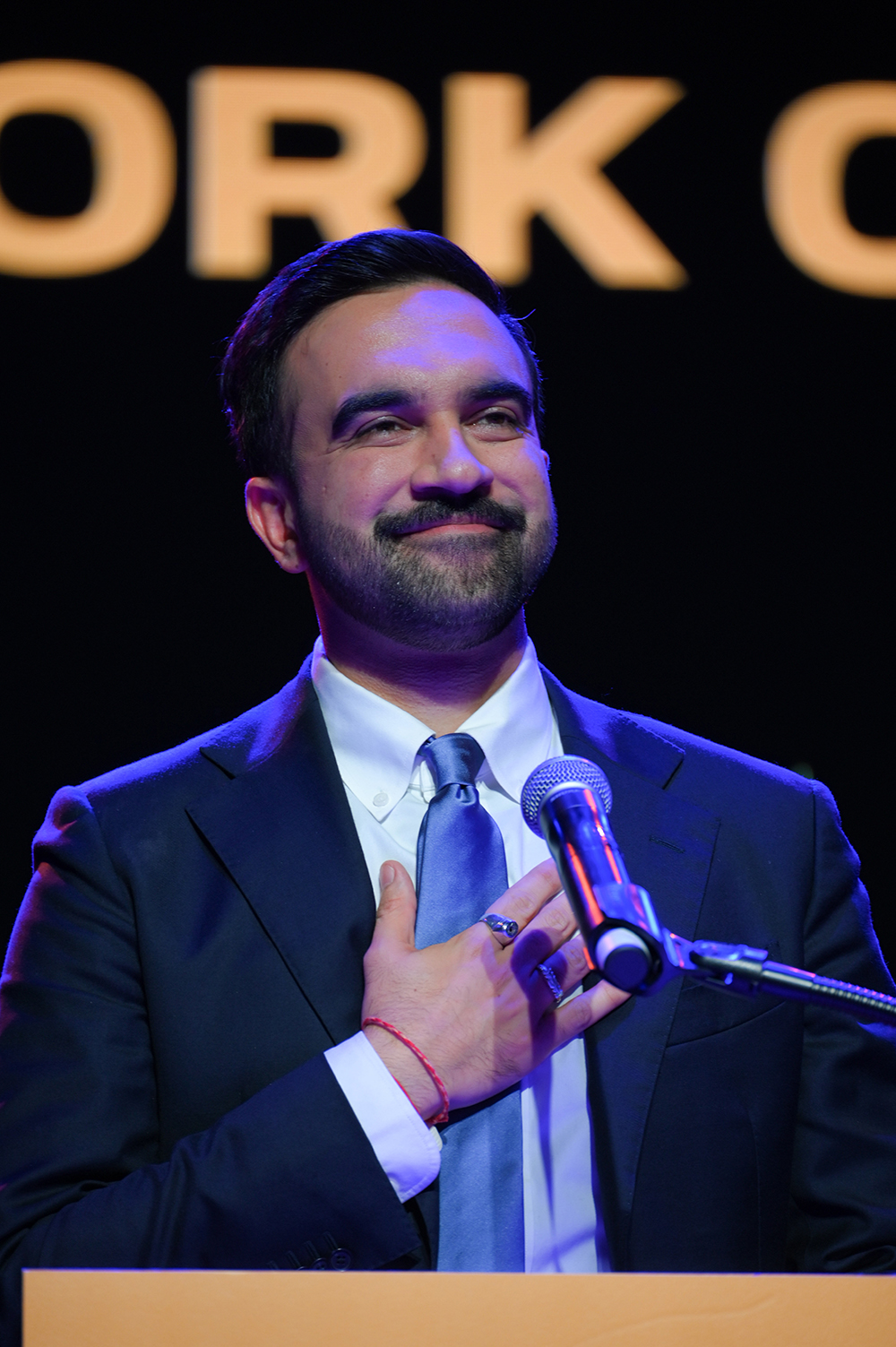
Struggle and Success of Zohran Kwame Mamdani: From Immigrant Roots to Rising New York Leader
The story of Zohran Kwame Mamdani is the story of a new generation of American political leadership emerging from the lived experiences of immigrants, working people, and communities seeking justice. His life traces a path across continents, cultures, and social frameworks. It is a journey deeply shaped by the struggles of displacement, identity, and belonging, as well as by a powerful sense of responsibility toward community and fairness. Though not the mayor of New York, Mamdani has become one of the most influential progressive voices in the city, and someone whom many believe may eventually rise to citywide leadership, perhaps even to the mayoralty one day.
Early Family Roots: Movement and Identity Across Borders
Zohran Kwame Mamdani was born on July 18, 1991, in Kampala, Uganda. His family background itself is a tapestry of continents and cultures. His father, the renowned filmmaker and theorist Mahmood Mamdani, is of Indian descent but was born in East Africa. His mother, Mira Nair, is an award-winning Indian filmmaker celebrated for global cinema that portrays cultural realities with raw honesty.
Because of their professions and backgrounds, Zohran grew up in a household where art, politics, history, and identity were constantly discussed and questioned. He was exposed early to stories of colonialism, exile, migration, and the experiences of people whose lands and lives had been shaped by powerful political forces.
When Zohran was young, the family relocated from Uganda to New York City. He grew up in a multicultural environment, balancing multiple identities and learning how different worlds could coexist in a single city. This early exposure shaped his ability to understand the struggles of people from many backgrounds.
Childhood in New York and Early Awareness of Inequality
Growing up in New York meant witnessing the city’s beauty but also its contradictions. Zohran lived in a city full of wealth and opportunity, yet one where inequality was visible everywhere: in housing, in schools, in policing, in employment, in neighborhoods divided by class and race. The experience of being an immigrant child further sharpened his observation of how the city treated different people in different ways.
He attended public school and later college, where he developed interests in political theory, history, and community justice. Yet his education was not only academic. He learned from conversations with taxi drivers, restaurant workers, artists, street vendors, and neighbors who were the heartbeat of the city. These conversations grounded him. They taught him that the struggles of everyday people were not simply individual hardships but the result of systems designed to privilege a few at the expense of many.
Political Awakening During College
During his university years, Mamdani became deeply involved in political discussions and activism. He learned the mechanics of how policy affects communities, how wealth influences law, and how power structures maintain themselves. But he also saw how organizing at the grassroots level can challenge these structures.
He began to identify strongly with democratic socialism, believing that the government should serve ordinary people rather than corporations or elite interests. He saw housing as a right, not a commodity. He saw healthcare as a necessity, not a luxury. He believed that workers, tenants, and immigrants deserved dignity.
This ideological foundation would later define his political identity.
The Move to Queens and Community Organizing
Zohran eventually moved to Astoria, Queens, a neighborhood known for its diversity, creativity, and working-class communities. Here, he did not simply live; he participated. He became active in tenant organizing, community outreach, and local advocacy. He listened more than he spoke. He learned what people needed.
He took a job working as a housing counselor, helping tenants fight evictions and navigate the housing court system. Through this work, he developed a firsthand understanding of the housing crisis in New York. He saw families forced from their homes by rising rents, landlords manipulating legal systems, and working people struggling just to stay rooted.
This was where the seeds of his political journey were planted.
The Decision to Run for Public Office
By 2019, Mamdani saw that advocacy alone could not change the system fast enough. Policies were needed. Law was needed. Representation was needed. So he made the bold decision to run for New York State Assembly in District 36.
His campaign was unusual for New York politics. He did not rely on wealthy donors. He did not run on personal ambition. Instead, he ran on door-knocking, conversation, and collective community support. He ran with the backing of the Democratic Socialists of America (DSA), a grassroots movement rather than a traditional political machine.
His message was clear:
- Housing is a human right.
- Tenants deserve stability.
- Workers deserve dignity.
- Immigrants deserve belonging.
- The city belongs to the people who live in it.
This message resonated deeply in Astoria.
Victory: A New Kind of Politician Emerges
In June 2020, Mamdani defeated the long-time incumbent. His victory symbolized a shift in New York politics:
- From establishment to grassroots.
- From transactional politics to values-driven leadership.
- From political distance to community presence.
His election was not just a personal achievement. It was part of a growing movement of young, diverse, progressive leaders reshaping the future of the city.
Struggles and Challenges in Office
Winning office was only the beginning.
As an Assemblymember, Mamdani faced:
- Resistance from political elites.
- Pressure from corporate lobbyists.
- Criticism from media outlets aligned with establishment interests.
- Efforts to marginalize socialist policy proposals.
Yet he remained unwavering.
He championed legislation to:
- Cancel rent for tenants affected by COVID-era economic hardships.
- Provide debt relief for taxi drivers crushed by medallion loans.
- Strengthen public housing funding.
- Expand healthcare access.
One of his biggest victories was helping secure taxi worker debt relief, which prevented thousands of cab drivers from financial ruin and mental collapse.
This victory demonstrated something critical:
Mamdani does not just speak. He delivers.
A Leader for the Future: The Path Toward Possible Mayoral Leadership
Though Zohran Mamdani has never run for mayor, many political observers, organizers, and young New Yorkers see him as a potential future citywide leader. Why?
Because:
- His leadership is rooted in lived experience.
- He is connected to the struggles of real communities.
- He is unafraid to challenge power.
- He sees government as a tool for justice, not corporate interest.
If someday he seeks the mayoralty, his rise will be built not on wealth or privilege but on trust, movement-building, and shared struggle.
Conclusion: A Story Still Being Written
Zohran Kwame Mamdani’s story is not one of personal triumph alone. It is the story of a community rising with him. His life shows that leadership does not require inheriting power; it requires earning it through service.
His journey from Kampala to Queens, from community organizer to state assemblyman, represents a new vision of what leadership in New York can be:
inclusive, just, grounded, and unafraid.
Related News